

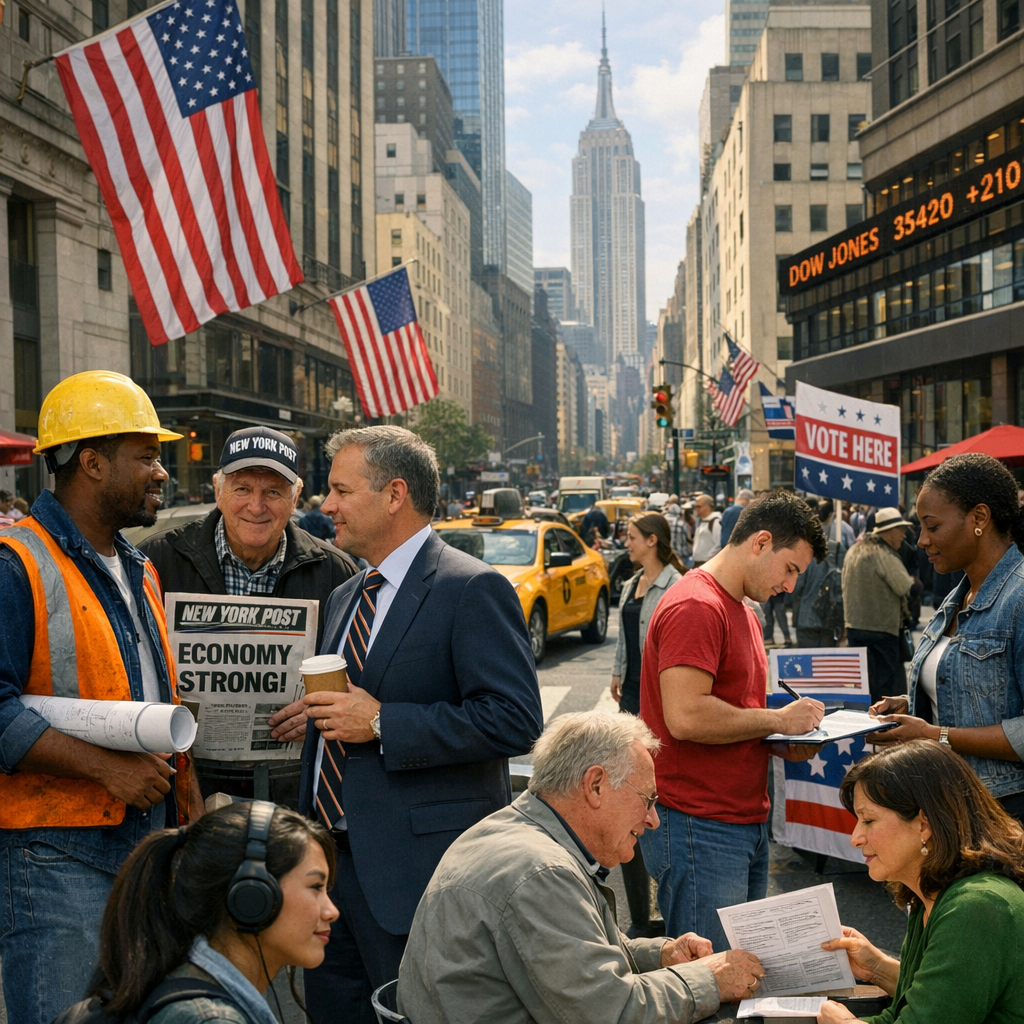
The U.S. economy has demonstrated resilience and adaptability in recent times, navigating through various challenges and opportunities. Understanding the current economic landscape is crucial for both individuals and businesses as they plan for the future.
Economic Growth and Employment
In the first quarter of 2026, the U.S. economy grew at an annualized rate of 2%, marking a rebound from the previous quarter’s 0.5% growth, which was significantly affected by a federal government shutdown. This growth was bolstered by increased federal spending and robust investment in artificial intelligence (AI) technologies. However, consumer spending showed signs of slowing, with a 1.6% increase, reflecting financial pressures on middle and moderate-income households. Business investment surged by 8.7%, driven by growth in the AI sector, while residential investment declined for the fifth consecutive quarter, down 8%.
On the employment front, April 2026 saw the addition of 115,000 jobs, surpassing economists’ expectations. The unemployment rate held steady at 4.3%. The health care sector led job creation with 37,000 new positions, continuing its consistent growth trend. This employment resilience underscores the labor market’s stability despite global challenges such as energy shocks and AI-driven layoffs.
Inflation and Monetary Policy
Inflation surged in March 2026, attributed to an energy shock stemming from geopolitical tensions. This rise in inflation has raised concerns among Federal Reserve officials, influencing discussions on potential interest rate changes. Despite these inflationary pressures, broader economic indicators have shown resilience, with the Federal Reserve maintaining interest rates unchanged, citing the uncertain outlook due to geopolitical tensions.
Political Landscape
The United States continues to be characterized by a two-party system, with the Democratic and Republican parties dominating the political scene. While other parties occasionally challenge this duopoly, the Democrats and Republicans remain the primary political forces. The political landscape is also influenced by shifts in social media usage, with platforms experiencing changes in user demographics and political leanings. For instance, Twitter has seen a significant shift toward Republican users, reflecting broader trends in the digital public sphere.
Looking Ahead
As the U.S. economy continues to navigate through domestic and international challenges, staying informed about economic indicators and political developments is essential. The interplay between economic performance, inflationary pressures, and political dynamics will shape the nation’s trajectory in the coming months and years.
For residents of Louisville, Kentucky, understanding these national trends can provide valuable context for local economic and political developments, aiding in informed decision-making and community engagement.