

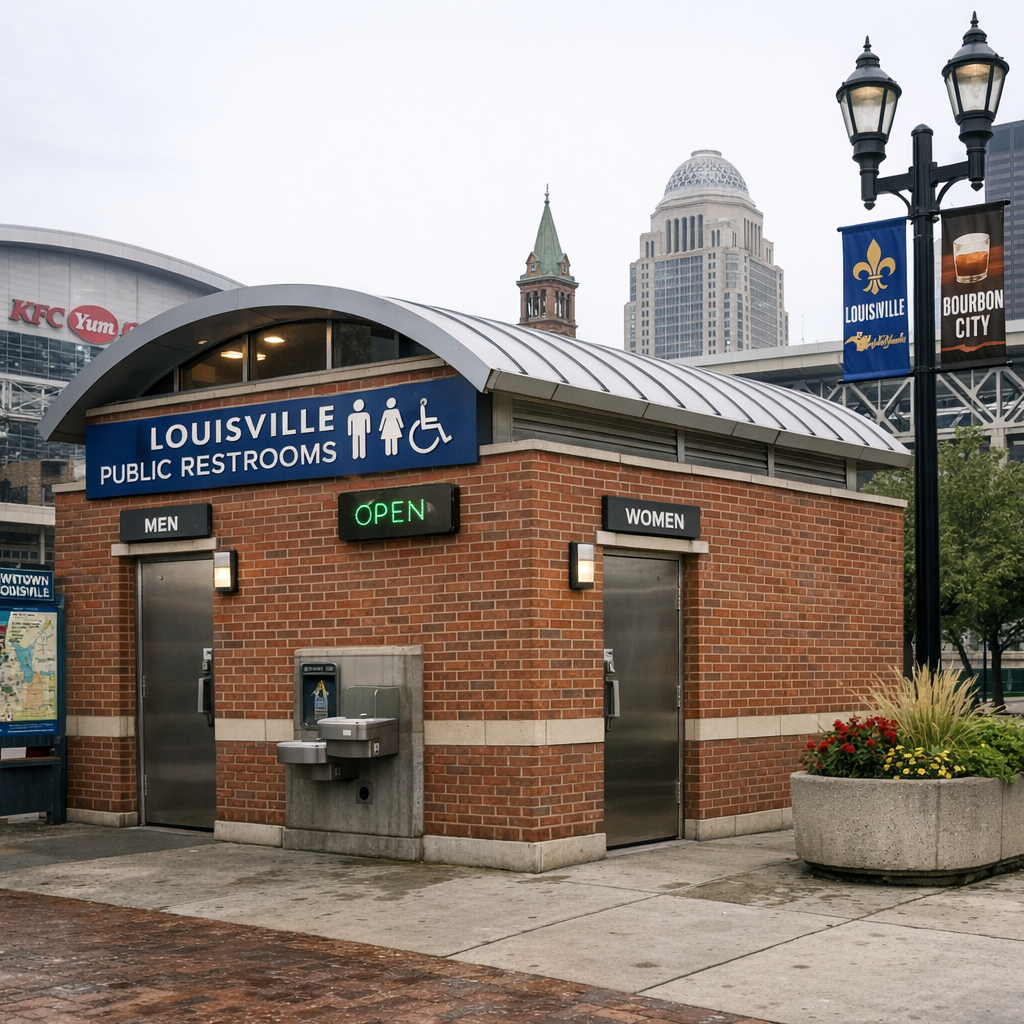
Louisville’s downtown area is grappling with a significant shortage of public restrooms, a situation that affects both residents and visitors. This lack of facilities has led to increased instances of public waste, raising health and sanitation concerns.
Current Challenges
Data from the Louisville Downtown Partnership (LDP) indicates that since 2021, over 3,380 instances of biohazardous waste, including human and animal waste, have been cleaned in the city’s central business district. In the first half of 2025 alone, there were 950 reports, accounting for more than a quarter of all such incidents in the past four years. These waste issues are prevalent in alleys, sidewalks, and other public spaces, posing health risks and diminishing the area’s appeal.
Community Impact
The shortage of public restrooms disproportionately affects the homeless population. Individuals without stable housing often struggle to find accessible facilities, leading to unsanitary conditions. For instance, some have resorted to using dumpsters or secluded areas to relieve themselves, highlighting the urgent need for accessible public restrooms.
City’s Response
Despite the evident need, city officials have not prioritized the addition of public restrooms. Rebecca Fleischaker, executive director of the Louisville Downtown Partnership, stated, “We do not have any plans to do it.” Concerns about costs, liability, and maintenance have been cited as barriers to implementing these facilities.
Community Advocacy
Various community leaders and organizations advocate for the installation of public restrooms. They emphasize that such facilities are essential for human dignity and public health. The Cathedral of the Assumption, for example, provides restroom access during meal services, recognizing the critical need among the homeless community.
Looking Ahead
Addressing the public restroom shortage in downtown Louisville requires a collaborative effort between city officials, community organizations, and residents. Implementing accessible and well-maintained public restrooms can significantly improve sanitation, public health, and the overall quality of life in the city.