

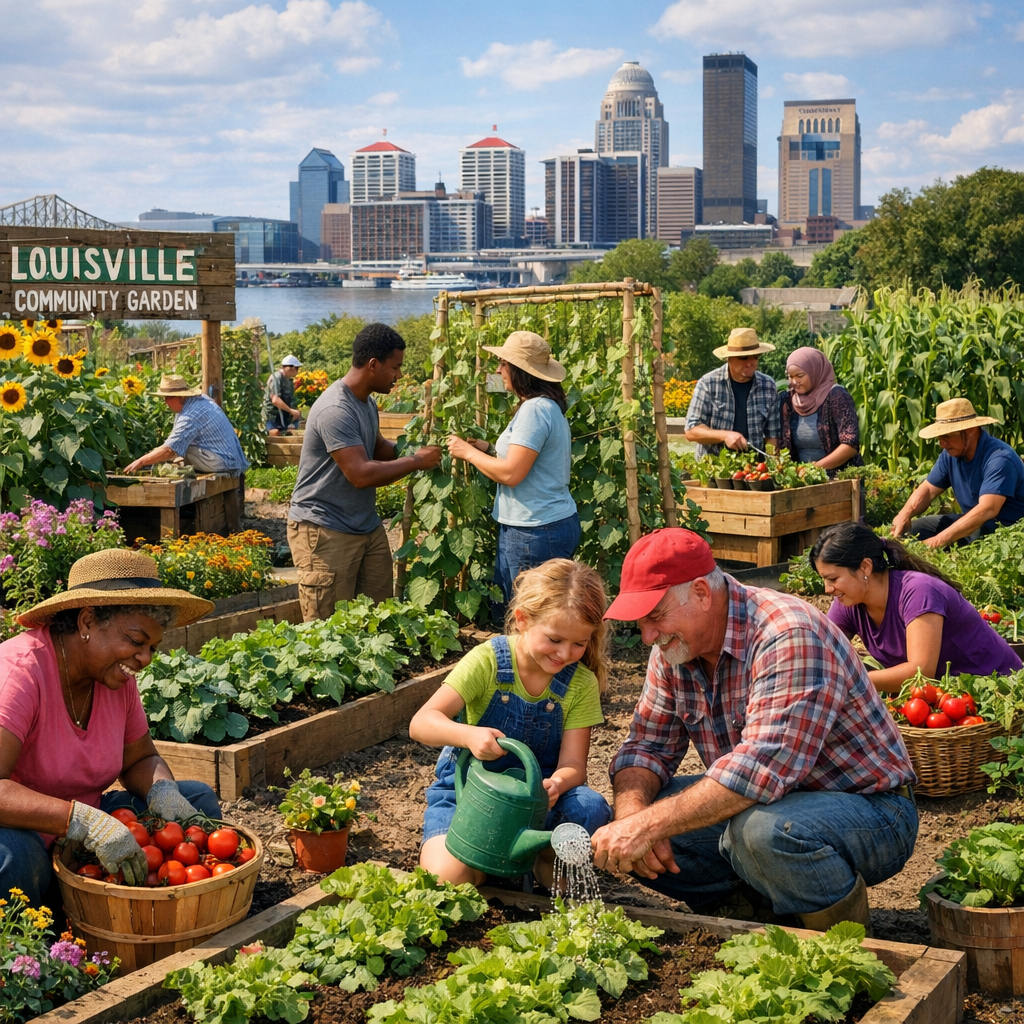
In the heart of Louisville, community gardens are blossoming, offering residents not only fresh produce but also a sense of connection and purpose. These green spaces are transforming neighborhoods, promoting sustainability, and fostering community bonds.
The Rise of Community Gardens
Community gardens have become vital in urban settings, addressing food insecurity and promoting healthier lifestyles. In Louisville, these gardens are more than just plots of land; they are hubs of activity where neighbors collaborate, share knowledge, and cultivate relationships.
Notable Community Gardens in Louisville
Shelby Park Community Garden
Located at the corner of E. St. Catherine and S. Hancock St., the Shelby Park Community Garden provides access to fresh produce grown using organic practices. The garden features perimeter beds that offer free vegetables to anyone, emphasizing inclusivity and community engagement. New gardeners are welcomed with orientations and ongoing support. For more information, interested individuals can contact the garden via email at spcommunitygarden@gmail.com or text at 502-751-5491.
The Community Garden at The Train Depot
Situated at 2230 Buechel Ave., The Train Depot’s Community Garden offers rentable plots on a first-come, first-served basis, prioritizing residents within a one-mile radius who lack green space at home. The garden hosts workshops covering topics like composting, growing food, and winter gardening. Participants can purchase quality soil, heritage seeds, and gardening kits on-site. To reserve a plot or learn more, individuals can contact The Train Depot at 502-888-3944.
7th Street Community Garden
Located at 3221 S. 7th St., the 7th Street Community Garden is a space where residents can cultivate their own vegetables with a bit of work and time. The garden operates Monday through Friday from 8 AM to 4:30 PM, providing a structured environment for gardening enthusiasts. For more details, individuals can call 502-569-2344.
Limerick Community Garden
Found at 931 S. 6th St., the Limerick Community Garden is managed by the Kentucky Agriculture Extension Service’s Jefferson County Office and maintained primarily by gardeners and volunteers. This urban oasis offers access to healthy food options for its member gardeners, their friends, and families. The garden operates daily from 8 AM to 9 PM. For inquiries, individuals can contact 502-569-2344.
Organizations Supporting Urban Agriculture
Several organizations in Louisville are dedicated to promoting urban agriculture and supporting community gardens:
Louisville Grows
Louisville Grows is a nonprofit organization working to create greener, healthier neighborhoods by promoting urban horticulture and advancing health equity. They offer programs in urban forestry and horticulture, aiming to plant 1,000 trees each year and support community gardens with tools, technical assistance, and education. More information can be found on their website.
Common Earth Gardens
Managed by Catholic Charities of Louisville, Common Earth Gardens empowers refugees and immigrants to utilize their farming skills, fostering purpose and community integration. They manage six community gardens around Louisville, primarily in the South End and Buechel, with over 450 participants. Interested individuals can contact Jane Evans at 502-637-9786 ext. 230 or via email at jevans@archlou.org.
Getting Involved
For those interested in joining or supporting a community garden, reaching out to these organizations or visiting the gardens can provide information on available plots, volunteer opportunities, and upcoming events. Engaging with community gardens not only offers access to fresh produce but also strengthens community ties and promotes sustainable practices.
Louisville’s community gardens are more than just spaces for cultivation; they are vibrant centers of community engagement, education, and growth. By participating, residents contribute to a healthier, more connected city.