

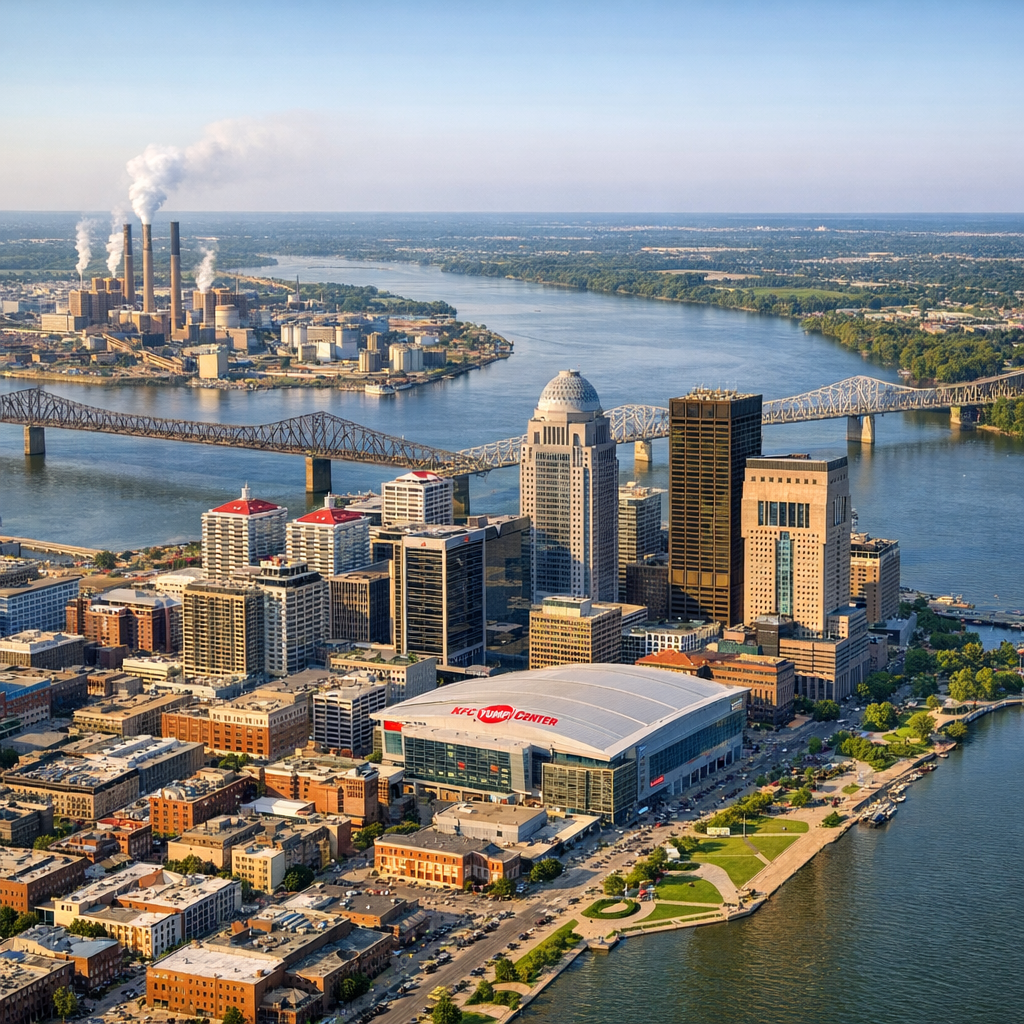
As a resident of Louisville, Kentucky, I’ve observed firsthand how national economic policies shape our city’s growth and prosperity. Our strategic location along the Ohio River has historically positioned us as a hub for shipping and logistics, a legacy that continues today with the presence of UPS’s Worldport air hub. This facility not only bolsters our local economy but also connects us to global markets, underscoring the significance of national trade policies on our community.
Recent federal initiatives aimed at revitalizing manufacturing have had tangible effects here. For instance, Ford’s $2 billion investment to produce affordable electric vehicles at the Louisville Assembly Plant has not only created jobs but also positioned our city at the forefront of the automotive industry’s shift towards sustainability. Such investments highlight the direct impact of national economic strategies on local employment and industrial growth.
However, not all national policies have yielded positive outcomes for Louisville. The imposition of tariffs on major trading partners introduced uncertainties that affected our businesses. As noted by local economic leaders, these tariffs led to project delays and reduced consumer spending, illustrating the delicate balance between national trade policies and local economic stability.
On a brighter note, our city’s proactive approach to economic development has been commendable. The establishment of the Louisville Economic Development Alliance (LEDA) aims to accelerate job growth and attract investments. Additionally, the merger of the Louisville Economic Development Alliance and Greater Louisville Inc. into One Louisville signifies a unified effort to bolster our economy.
Our educational institutions also play a pivotal role. The University of Louisville, for example, has been a significant economic driver, contributing to job creation and adding over a billion dollars to Kentucky’s economic output. This underscores the importance of aligning national educational policies with local economic needs to foster a skilled workforce.
In conclusion, while national economic policies set the stage, it’s our local initiatives and resilience that determine how we navigate these broader trends. By staying informed and engaged, we can ensure that Louisville continues to thrive amidst the ever-evolving national economic landscape.