

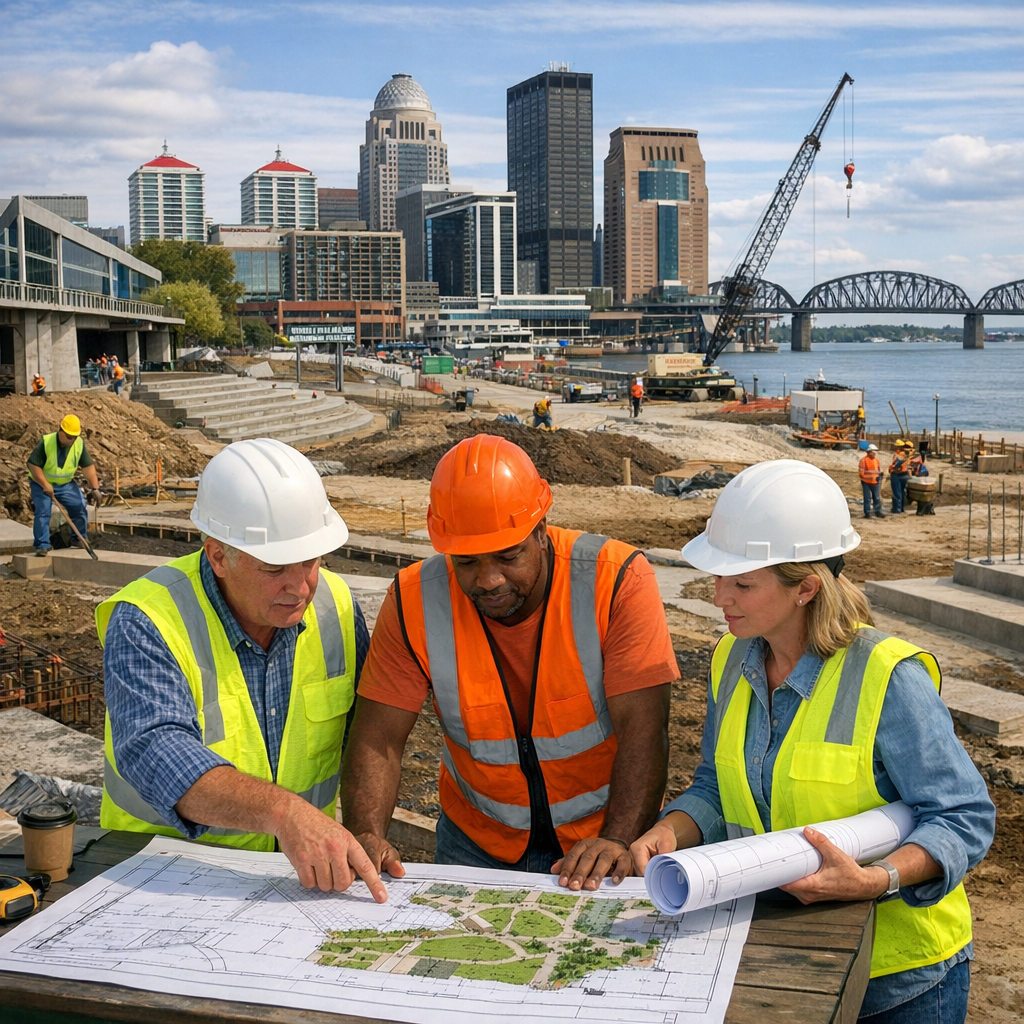
Louisville is undergoing a transformation. While many changes are already visible, several significant infrastructure projects are preparing to reshape daily life across the city—from riverfront gathering spaces to old roadways and aged utility systems. Here’s a closer look at what’s coming, why it matters, and how it impacts neighborhoods.
The Reimagined Belvedere: Downtown’s Heart Revived
The Belvedere, long a staple of Louisville’s riverfront, is receiving a complete redesign led by Heatherwick Studio in partnership with local architects. The project includes a newly energized plaza space above the current parking garage, offering sweeping views, public amenities, and greenspace designed for year-round use. Construction at the garage level is set to begin this fall, with above-ground enhancements scheduled to start in early 2027. The goal is to complete the renovation before Thunder Over Louisville in 2030, giving downtown a vibrant backyard for the whole city.
Transportation Enhancements: Roads, Bridges, and Safer Connections
A slate of roadway and transit projects is underway:
- River Road Corridor: Transforming River Road from two to four lanes from Beargrass Creek to Zorn Avenue, the project also includes decorative lighting and pedestrian improvements. It’s tied to Vision Zero safety initiatives and aims to make the route safer for all users.
- I-71 / Zorn Avenue Interchange: Expanding lanes and adding multi-use paths to improve traffic flow and walkability.
- Aiken Road & Arnold Palmer Boulevard Roundabout: Designed to make a dangerous intersection safer for drivers, cyclists, and pedestrians. The closure will require alternate routes, but construction should conclude within about ten weeks.
Water, Sewers, and Health: Addressing Long-Overdue Needs
Louisville’s systems for wastewater, flood protection, and stormwater management are showing their age. Some parts trace back to the 19th century. A new Critical Repair & Reinvestment Plan puts a price tag of roughly $4.3 billion over 20 years on needed fixes—nearly $500 million of that directed toward meeting federal requirements to reduce sewer overflows. Upgrading water treatment, improving inland stormwater systems, and reducing flooding across neighborhoods are central pillars.
Walking, Biking, and Neighborhood Connectivity
Alongside roadway projects are efforts to make Louisville more walkable and bike-friendly:
- Construction of protected bike lanes, pedestrian refuge islands, curb extensions, wider sidewalks, and tree canopy improvements along corridors like 9th Street and Muhammad Ali Boulevard.
- The Northwest Louisville Community Connectivity Study is gathering ideas to better link neighborhoods south of the Riverside Expressway (I-64) with riverfront assets, helping bridge physical and social divides.
What This Means for Residents
Short-term disruptions are likely—increased traffic, detours, and construction noise are part of large-scale improvements. But the long-term benefits: safer streets, more public spaces, better flood protection, and enhanced mobility without relying solely on cars. Plus, as bridges, plazas, and parks improve, the quality of neighborhood life rises.
How to Stay Involved
These plans involve many moving parts—public meetings, surveys, and design phases where resident input really matters. Watch for city updates, participate in outreach efforts, and share your priorities—whether it’s safer sidewalks, more trees, or reliable water infrastructure in your area. Louisville is built on its neighborhoods, and community voices help shape how and where we grow.