

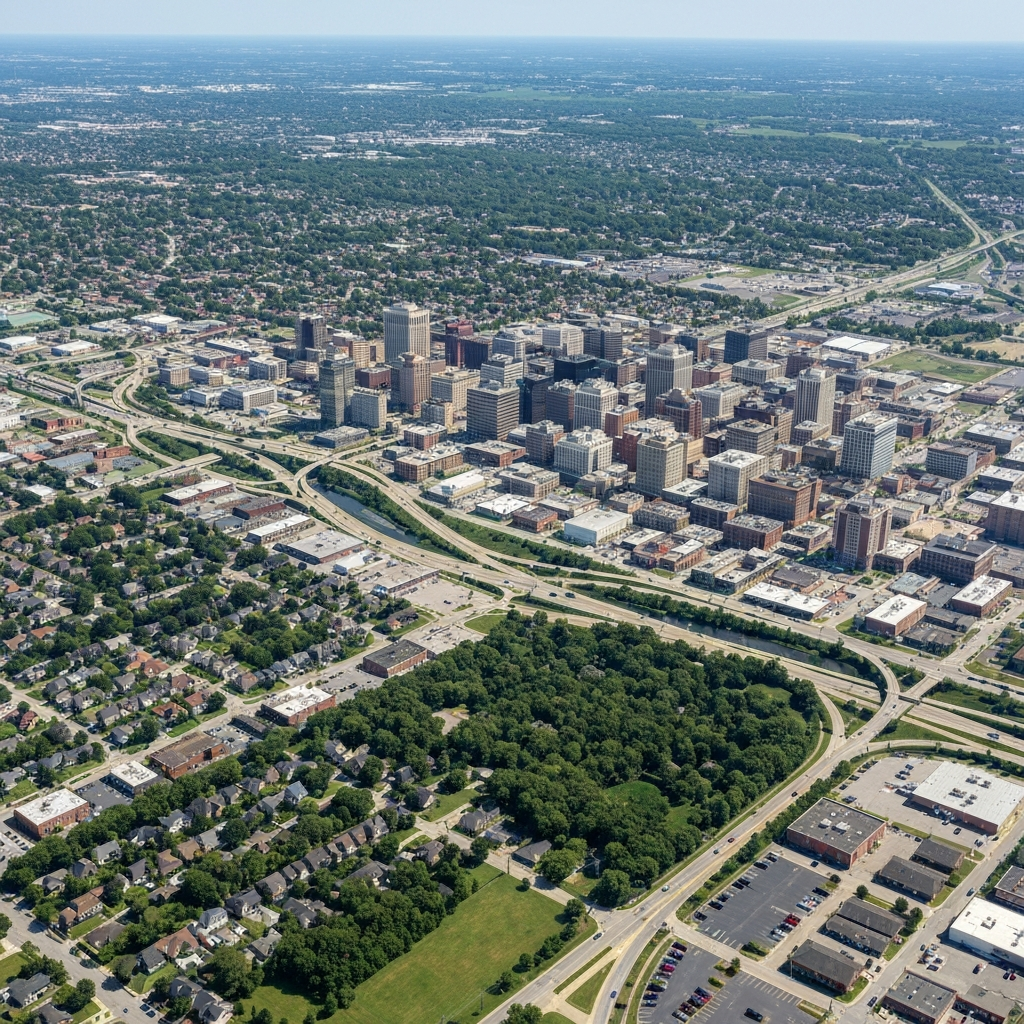
Louisville, Kentucky, has been identified as one of the fastest-warming cities in the United States, a phenomenon largely attributed to the Urban Heat Island (UHI) effect. This effect occurs when urban areas experience significantly higher temperatures than their rural surroundings due to human activities and infrastructure.
Causes of the Urban Heat Island Effect
The primary contributors to the UHI effect in Louisville include:
- Dark Surfaces: Materials like asphalt and dark-colored roofs absorb and retain heat, increasing ambient temperatures.
- Limited Vegetation: Reduced tree canopy and green spaces diminish natural cooling through shade and evapotranspiration.
- Urban Infrastructure: Dense concentrations of buildings and roads trap heat, preventing natural cooling.
Impacts on the Community
The UHI effect has several adverse effects on Louisville residents:
- Health Risks: Elevated temperatures can exacerbate respiratory issues and increase heat-related illnesses, particularly among vulnerable populations.
- Increased Energy Consumption: Higher temperatures lead to greater use of air conditioning, resulting in higher energy bills and increased greenhouse gas emissions.
- Environmental Degradation: The UHI effect contributes to poorer air quality and can stress local ecosystems.
Mitigation Strategies
To combat the UHI effect, Louisville has implemented several strategies:
- Cool Roofs: Installing reflective roofing materials to reduce heat absorption.
- Green Roofs: Incorporating vegetation on rooftops to provide insulation and cooling.
- Tree Planting Initiatives: Increasing the urban tree canopy to provide shade and improve air quality.
- Cool Pavements: Utilizing lighter-colored materials for roads and sidewalks to reflect more sunlight.
Residents can contribute by planting trees, using light-colored roofing materials, and supporting local greening projects. Collective efforts are essential to mitigate the UHI effect and enhance the quality of life in Louisville.